Anatomy 101: Meet Your Spine
Posted Aug 17, 2026 at 14:26

Posted Aug 17, 2026 at 14:26
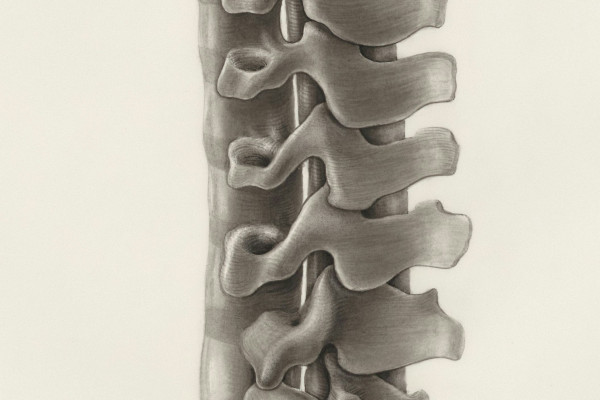
Anatomy 101 is a series that's been in the works for a while, and it's genuinely exciting to finally kick it off. The plan is to work through general anatomy of key areas first, building a solid foundation before going into more detail as the series progresses.
The first stop is the spine as a whole, which makes sense as a starting point since it's the part of the body most frequently worked with day to day.
The spine is made up of 33 segments in total, split across five distinct regions: the cervical spine (7 segments), the thoracic spine (12), the lumbar spine (5), the sacrum (5), and the coccyx (4).
Interestingly, by the time most people reach adulthood, the individual bones of the sacrum and coccyx typically fuse into single bony masses each, reducing the practical count to 26 (or 24 mobile segments, plus the fused sacrum and coccyx).
Each area of the spine is genuinely unique, shaped for a different specific role. At the same time, they share traits that let them work together, allowing the range of movement and bending we rely on every day. One of the clearest examples of this teamwork is shock absorption, one of the spine's key functions.
Shock absorption is essential. Every single step sends vibrations travelling through the bones and joints, and without the spine's ability to absorb that impact, the body would wear down and sustain injury far more easily.
The spine handles this in two distinct ways.
Intervertebral discs. Between each vertebra sits a disc, best pictured as a jelly-filled cushion, absorbing shock and providing a protective buffer between the hard, bony vertebral bodies stacked above and below it.
The spine's natural curves. A healthy spine has three opposing curves running its length: lordosis (in the cervical and lumbar regions) and kyphosis (in the thoracic region). These curves let the spine function like a spring, further supporting shock absorption and enabling the walking, running, jumping, and sitting we do without a second thought.
More on these fascinating parts of spinal anatomy is coming soon in the next instalment of this series.
How many bones are actually in the spine? There are 33 segments in total during development, though the sacrum and coccyx typically fuse into single bony masses by adulthood, bringing the practical number down to 26.
What are the five regions of the spine? The cervical spine (neck, 7 segments), thoracic spine (upper back, 12 segments), lumbar spine (lower back, 5 segments), sacrum (5 fused segments), and coccyx (4 fused segments, commonly known as the tailbone).
What do intervertebral discs actually do? They sit between each vertebra, acting as a cushion that absorbs shock and protects the bony vertebral bodies from grinding directly against each other during movement.
What are lordosis and kyphosis? They're the spine's natural curves. Lordosis describes the inward curves in the neck and lower back, while kyphosis describes the outward curve in the upper back, together helping the spine act like a spring.
Why does the spine need to absorb shock in the first place? Every step, jump, or movement sends vibrations through the bones and joints. Without effective shock absorption, the body would experience far more wear and injury over time.