Why Chiropractic Care Starts With Better Breathing
Posted Jul 21, 2026 at 17:38

Posted Jul 21, 2026 at 17:38
How often do you feel stiff and tell yourself you should probably stretch a bit? You might even google a few stretches and do them once or twice before life gets in the way. If your time is genuinely limited but you want to feel better, move more freely, and have more energy, there's one muscle worth prioritising above almost anything else: your diaphragm. It's not the most obvious muscle to think about stretching, but it's genuinely important, and it's part of the picture we look at with chiropractic care near me.
Breathing through your nose and using your diaphragm properly means your lungs work efficiently, without needing extra help from muscles that aren't designed for the job long-term. When your breathing is shallow and relies mainly on your chest, muscles that assist with breathing, like the scalenes in your neck, end up working overtime trying to move your ribs and create room for your lungs. Over time, that overtime work can contribute to neck and shoulder tension.
The diaphragm is a dome-shaped muscle that sits at the base of your lungs. When it contracts, it moves downward, creating more room for your lungs to fill with air. On the exhale, it lengthens and moves back upward, while your deep abdominal muscles tighten. Children naturally breathe this way; watch a young child and you'll usually see their belly rising and falling with ease. As we get older, stress and the general demands of daily life tend to make our breathing shallower, and the diaphragm shortens, forcing other muscles in the chest, neck, and back to pick up the slack.
Shallow, chest-based breathing, and breathing through your mouth, tend to be read by your nervous system as signs of stress, which can trigger the release of stress hormones like cortisol and adrenaline, along with general muscular tension. This is one of the more genuinely useful reasons to work on your breathing pattern: it's less about "getting more oxygen" (your blood oxygen levels are typically already close to normal if you're generally healthy) and more about taking unnecessary strain off your neck, shoulders, and back, and helping your nervous system settle into a calmer state.
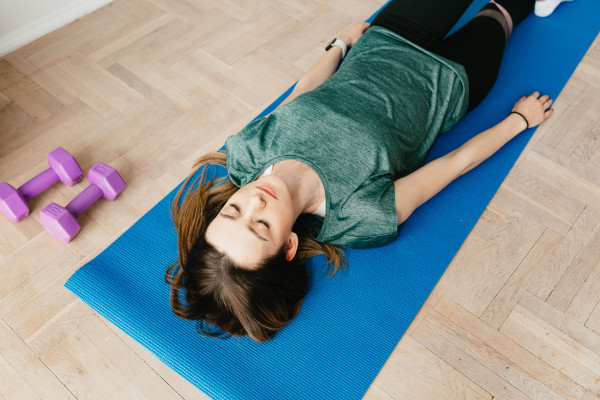
The good news is it's never too late to change this pattern. One of the simplest ways to start is practising abdominal breathing, which helps lengthen and strengthen your diaphragm, and it's something you can do lying in bed, so there's really no excuse not to try it.
Lie down and place one hand on your belly and the other on your chest. Keep your mouth closed, with the tip of your tongue resting gently behind your top teeth without touching them. Breathe in through your nose and notice which hand rises: you want the hand on your belly to move more than the one on your chest. Make your exhale long and complete, until you feel the air has fully left your lungs. Repeat for a few minutes each day.
If you've been breathing this way for years, doing ten reps occasionally won't create lasting change, but a few minutes daily can genuinely become second nature over time, and the more aware you become, the easier it gets.
Breathing pattern is one of several things we look at as part of a broader vitality assessment here at the clinic, alongside posture and movement, because it can genuinely relate to ongoing back pain and neck pain or stiffness. This is part of why the benefits of chiropractic medicine go beyond a single symptom: we're looking at the whole picture, not just the area that hurts. You can read more about our whole-body approach to assessment.
If you're not sure whether your breathing pattern might be contributing to your stiffness, ask us on your next visit, or book an initial consultation to find out. Contact the team if you have questions first.
Why does diaphragm breathing matter more than other stretches?
Because it's a muscle almost everyone neglects, but it plays a central role in how efficiently you breathe and how much strain other muscles, like those in your neck, end up carrying as a result.
Does better breathing really increase my oxygen levels?
Not dramatically, if you're generally healthy; your blood oxygen levels are usually already close to normal regardless of breathing pattern. The real benefit is reduced strain on accessory muscles and a calmer nervous system, rather than a significant oxygen boost.
How long does it take to notice a difference?
This varies, but doing the exercise consistently, for a few minutes daily, tends to matter more than doing it intensely once in a while. Many people notice a difference in tension within a few weeks of regular practice.
Can shallow breathing really contribute to neck and back pain?
It can be a contributing factor for some people, since overworked accessory breathing muscles can add to tension in the neck, shoulders, and upper back. It's rarely the only cause, so a full assessment helps clarify what's going on.
Is this technique safe for everyone?
Abdominal breathing is generally safe and gentle for most people. If you have a specific respiratory condition or are unsure, it's worth checking with your GP or clinician first.