Why Chiropractor Spinal Adjustments Aren't Finger Cracking
Posted Jul 23, 2026 at 16:08

Posted Jul 23, 2026 at 16:08
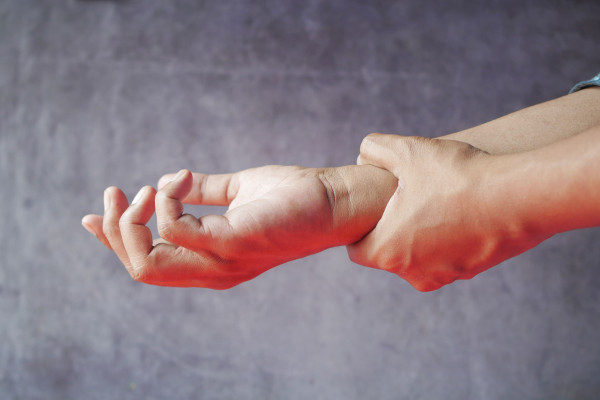
A question we're often asked in the clinic is, "Does cracking my fingers cause arthritis?" The type of arthritis people usually mean is osteoarthritis, sometimes called "wear and tear" arthritis, which develops gradually over time and can bring stiffness, swelling, reduced function, weakness, and pain. The short answer is: research says no, cracking your knuckles doesn't cause arthritis, though there's a bit more nuance worth understanding.
Joint cracking is a normal physiological event, caused by gas suddenly being released from the joint, producing that familiar pop. Multiple studies, including a well-known 50-year self-experiment where one person cracked knuckles on only one hand throughout their life, have found no difference in arthritis rates between cracked and uncracked joints, even with extremely frequent cracking.
That said, this doesn't mean cracking is entirely risk-free. Unusually forceful or vigorous cracking has occasionally been linked to acute injuries like joint dislocation or tendon strain, and some research suggests habitual crackers may have slightly reduced grip strength, though findings here are mixed. If cracking a joint is ever painful, that's a sign to stop and get it checked, rather than something to push through.
It's a fair question: what about when chiropractors do something similar? A chiropractor spinal adjustments approach is genuinely different from self-cracking in several ways. Adjustments are applied to specific joints, in a specific direction, with a specific level of force, by someone trained extensively to assess which joint actually needs attention. They're typically described as "high velocity, low amplitude" impulses, meaning the movement is quick but the force involved stays close to what your joints handle during normal daily activity, rather than an uncontrolled, repeated stress applied at home.
The aim isn't simply to produce a crack; it's to help the joint move better, supporting your nervous system and the connection between your brain and body. Self-cracking, by contrast, is often just chasing the sound or feeling of release, without any assessment of whether that particular joint actually needed it.
If you're dealing with joint pain that might be osteoarthritis, the most useful step is a proper assessment, not a home remedy. Our approach is to work out why those joints are wearing more quickly than they should, and build a clear plan to take pressure off them so they can move more comfortably. You can read more about our whole-body approach to assessment.
If you'd like to understand more about what's happening in your joints, whether that's occasional cracking or genuine osteoarthritis concerns, chiropractic care near me starts with a proper conversation. Book an initial consultation, or contact the team if you have questions first.
Does cracking your fingers really cause arthritis?
No, this is well-studied, and research consistently finds no link between habitual knuckle cracking and arthritis, even with very frequent cracking over many years.
Is cracking your joints ever risky?
Rarely, but unusually forceful or vigorous cracking has occasionally been linked to acute injuries like joint dislocation or tendon strain. If cracking causes pain, that's worth getting checked rather than continuing.
How is a chiropractic adjustment different from cracking my own joints?
An adjustment is applied to a specific joint, in a specific direction, with a controlled level of force, based on an assessment of which joint actually needs attention, rather than simply chasing a cracking sound.
What actually causes osteoarthritis?
It develops gradually over time, generally linked to age, joint overuse, previous injury, and genetic factors, rather than everyday joint cracking.
What should I do if I think I have osteoarthritis?
Get a proper assessment rather than trying home remedies. Understanding what's actually driving the wear in your joints helps build a plan that genuinely addresses the cause.