Coordination Problems Can Start In The Brain
Posted Aug 21, 2026 at 16:42

Posted Aug 21, 2026 at 16:42
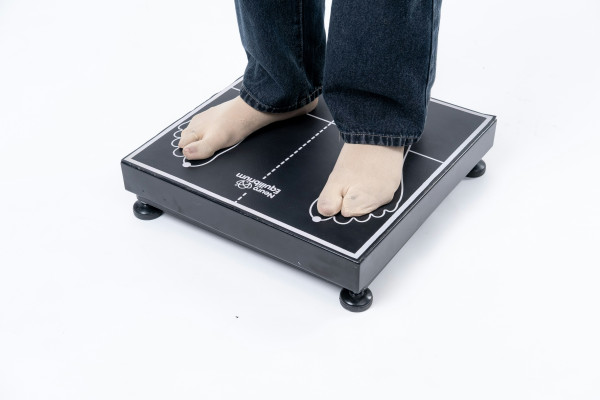
Anyone who's visited one of our clinics, or followed our social media, will already know we're genuinely fascinated by the brain. Why wouldn't we be? It controls everything we do. There's one area I want to focus on today, sometimes called the "little brain," properly known as the cerebellum.
The cerebellum does a great deal, but one of its most important jobs is helping you move smoothly. If someone has a damaged or poorly working cerebellum, the effects can show up in almost everything they do physically, from walking in a straight line to picking up a cup without spilling it.
It's worth being clear about what the cerebellum doesn't do too. It doesn't start movement; that job belongs to the motor cortex elsewhere in the brain. Instead, the cerebellum's role is to fine-tune movement once it's already underway, making it as smooth and accurate as possible, so you move exactly the way you mean to.
Despite being fairly small, the cerebellum contains more neurons than every other part of the brain put together. That gives it a huge capacity for processing information, far more than you'd expect from something tucked away at the base of your skull.
Beyond movement, the cerebellum also plays a real role in how we think. It's partly responsible for attention and language, and it even helps with emotional control, playing a part in fear and pleasure responses throughout the body.
To properly assess the cerebellum, we look at how well someone can perform a steady, repeated movement over a set stretch of time, usually around thirty seconds. This is typically tested with the eyes closed, so a person can't lean on visual cues to hide any problem with cerebellar function. If someone struggles to keep a steady rhythm or speed, on one side of the body or both, that gives us a real clue about whether their cerebellum is affecting their overall function.
When someone has a real problem with cerebellar function, their movements tend to look uncoordinated and jerky. They might move as though they're drunk, or seem unusually clumsy, bumping into things without quite meaning to.
Interestingly, the roadside sobriety tests police officers use are built around this exact same idea. They're designed to test cerebellar function directly, since alcohol and certain drugs get in the way of coordination in a similar manner. That said, being drunk is far from the only reason someone might show a problem here; plenty of other underlying causes can produce the same signs.
This is exactly why a thorough chiropractor near me looks beyond your immediate symptoms and assesses how well your whole nervous system, including your cerebellum, is functioning. A quick coordination test can reveal genuinely useful information about your overall neurological health, well beyond whatever brought you into the clinic that day.
If you're searching for chiropractic care near me, it's worth choosing a clinic that considers your nervous system as a whole rather than focusing narrowly on a single symptom. A properly thorough chiropractic clinic near me should be able to explain exactly what each assessment is checking for, and why it matters for your overall function. Our approach to identifying what's really going on beneath the surface explains this in more depth, and our structured six-step process shows how findings like this shape your ongoing care. When you're ready, get in touch with your local clinic to find out more.
What does the cerebellum actually control?
It primarily coordinates movement, refining it for precision and accuracy, while also contributing to attention, language, and emotional regulation.
Why is cerebellar function tested with eyes closed?
Closing the eyes removes visual feedback, meaning any coordination problems related to the cerebellum can't be masked by relying on sight.
What does a cerebellar deficit look like in practice?
Movements often appear uncoordinated or erratic, sometimes resembling intoxication, or the person may seem unusually clumsy and prone to bumping into things.
Is a coordination problem always related to the cerebellum?
Not necessarily. Several different factors can affect coordination, which is why a full assessment matters more than assuming a single cause.
Why would a chiropractor check something unrelated to my main complaint?
Because your nervous system works as a connected whole. A quick check like this can reveal useful information about your broader neurological function, not just the area causing you concern.