How Fascia Health Supports Your Spinal Adjustments
Posted Jul 27, 2026 at 15:43

Posted Jul 27, 2026 at 15:43
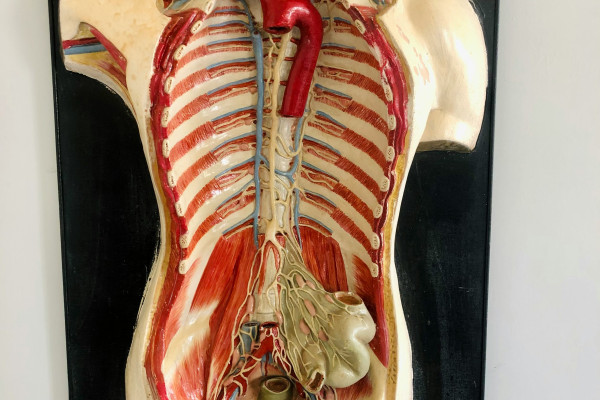
During your myofascial visits, you'll hear us talk about fascia a lot. We usually try to explain what it actually is, and how it works, in the simplest terms possible.
For a long time, fascia was largely ignored. Only small, isolated parts of this extensive system, such as the plantar fascia in your foot or the thoracolumbar fascia in your lower back, ever got much attention. The truth is that fascia runs throughout your entire body, covering not just muscles but joints, bones, nerves, and organs as well.
Defining fascia properly is still a work in progress, and different definitions float around depending on who you ask. The closest one comes from Dr Guimberteau. He describes fascia as the tension fibril network in the body, running from the surface of your skin down to the nucleus of individual cells. It's a genuinely global network, mobile and adaptable, a connective tissue that exists all over and within your body.
Deep fascia separates individual muscles from one another. It creates protective sheaths for nerves and blood vessels, envelops organs and glands, and surrounds joints and ligaments throughout your body.
Then there's the fascia wrapped around each muscle, known as the epimysium. It continues into the tendons and connects to the periosteum, the outer layer covering your bones. So when we talk about fascia lines connecting everything in your body, we mean a genuinely huge amount of interconnected tissue.
Because fascia runs through your entire body, improving mobility in one area tends to affect mobility elsewhere too. That's exactly why fascia gets considered a mediator between the various systems in your body, quietly linking things together that might otherwise seem unrelated.
This is part of why our myofascial team treats the body as a connected whole rather than isolating one sore spot. Restriction in your hip can genuinely influence tension in your shoulder, precisely because fascia ties the two together.
Plenty of factors can affect how well your fascia functions, and problems here often show up as pain, stiffness, reduced mobility, or weaker input to your nervous system. Some of the main culprits include:
Mechanical stress deserves a closer look, since it's one of the most common factors we see. Anyone who spends long hours at a desk, or who repeats the same movement pattern constantly through work or sport, is placing steady, cumulative strain on their fascia. This is a big part of why a chiropractor for back pain will often ask about your daily posture and habits, not just the moment your pain actually started.
The same logic applies to sports and repetitive training. A chiropractor for sports injuries regularly sees micro-injuries that built up gradually through overloaded tissue, long before any single dramatic incident ever occurred.
Understanding fascia changes how treatment gets approached. Rather than only focusing spinal adjustments at the exact site of your pain, our whole-body treatment philosophy considers the fascial lines connecting that area to the rest of you, along with the lifestyle factors, posture, hydration, stress, and diet, that keep those tissues healthy.
It's a genuinely fascinating area of the body, and we're fortunate to be practising at a time when fascia has finally been recognised properly, and is increasingly built into treatment plans that aim for lasting results by treating the body as a whole.
Can fascia problems cause pain in an area that seems unrelated to the actual issue?
Yes. Because fascia connects tissue throughout your entire body, restriction in one area can genuinely create tension or pain somewhere else entirely.
How does hydration actually affect fascia?
Fascia holds a significant portion of your body's water content, so dehydration can make it feel stiffer, less elastic, and generally less able to move properly.
Can stress really affect my fascia?
Yes. Emotional and physical stress both trigger inflammatory responses that can make fascia denser over time, which often leads to reduced range of motion.
Does poor posture genuinely damage fascia?
Sustained poor posture creates ongoing mechanical stress, and over time that steady strain can meaningfully affect how well your fascia functions.
How long does it take to improve fascia health?
It varies by individual, but most people notice meaningful change within a few months of consistent treatment, alongside better hydration, movement, and stress management.
If you'd like to learn more about fascia and how to keep it healthy, keep an eye on our blog, or simply ask us at your next appointment.