Neck Pain Starts With Your Jaw
Posted Aug 20, 2026 at 12:37

Posted Aug 20, 2026 at 12:37
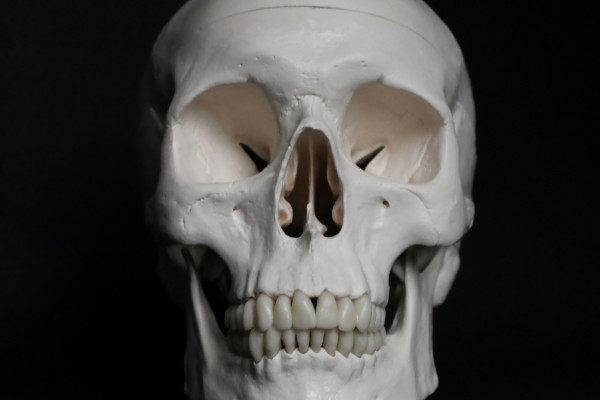
Everyone knows the jaw plays an essential role in daily life: eating, drinking, and communicating are all things we genuinely can't do without it. What most people don't realise is the wider impact jaw dysfunction can have on the rest of the body.
Your jaw, or temporomandibular joint (TMJ), is the joint connecting your mandible (lower jaw) to your temporal bone (part of the skull). It's a hinge joint that lets you open and close your mouth, essential for survival. When TMJ dysfunction prevents that movement from happening smoothly, bigger problems can start to develop elsewhere.
Some causes are fairly obvious, a blow to the head or a dislocated jaw, for instance. Others are far more subtle: teeth grinding, having teeth removed, amalgam fillings, braces, clicking or popping when moving the jaw, and difficulty chewing all count too.
The reason the TMJ matters so much comes down to where it sits. Alongside the peripheral nerves and general nervous system function we often focus on, there's another group worth knowing about: the 12 pairs of cranial nerves that exit directly from the brain, largely responsible for controlling the eyes, ears, tongue, and face.
The one we're interested in here is cranial nerve XI, the accessory nerve. It exits the skull through the jugular foramen, an opening formed by the occipital and temporal bones. This nerve is genuinely important because it supplies two key neck muscles: the trapezius and the sternocleidomastoid (SCM).
Since the "T" in TMJ stands for temporal, jaw dysfunction can affect movement of the temporal bone itself, which in turn can narrow the jugular foramen and potentially compromise the accessory nerve as it passes through.
The trapezius attaches into the occipital bone (the other bone forming the jugular foramen) and is primarily responsible for stabilising the shoulder blade. Working together on both sides, it also helps extend the neck, letting you look upward. The SCM handles turning and tilting the head.
If the nerve supply to these muscles becomes compromised, control and stability of head movement can start to suffer, which in turn can lead to genuine dysfunction and pain in the neck.
Neck function genuinely matters for the rest of the body too. How the neck moves directly influences how the lower back moves, thanks to something called coupled spinal motion, meaning dysfunction in the cervical spine can contribute to dysfunction in the lumbar spine. The reverse holds true as well: changes in the lower back can affect the neck, which can, in turn, affect the TMJ.
Because of this interconnected chain, the TMJ is one of the very first things assessed with every new client, and continually monitored throughout ongoing care, since changes here can trigger significant compensatory changes elsewhere in the body.
If you've been told you have a TMJ issue, suspect you might, or are dealing with neck or lower back pain and want to explore whether there's another explanation behind it, it's worth getting properly assessed. If you're researching neck pain treatment near me, this kind of connected, whole-body assessment is exactly what to look for.
Choosing a chiropractor near me for neck pain who genuinely investigates the TMJ, not just the neck in isolation, gives a far more complete picture of what's actually driving your symptoms. Get yourself booked in for a full consultation so we can figure out exactly what's going on in your body.
Can jaw problems really cause neck pain? Yes, genuinely. TMJ dysfunction can affect the temporal bone's movement, potentially compromising the nerve supply to key neck muscles like the trapezius and sternocleidomastoid, contributing to neck pain and reduced control.
What are some less obvious signs of TMJ dysfunction? Teeth grinding, having had teeth removed, amalgam fillings, braces, jaw clicking or popping, and difficulty chewing can all be subtle indicators, alongside more obvious causes like a blow to the head or jaw dislocation.
What is coupled spinal motion? It describes how movement in one part of the spine, like the neck, directly influences movement in another part, like the lower back, meaning dysfunction in one area can genuinely affect the other.
Why is the TMJ assessed with every new client? Because changes in TMJ function can trigger significant compensatory changes throughout the rest of the body, making it a genuinely important area to check regardless of where someone's primary symptoms are.
Could my lower back pain actually be connected to my jaw? It's possible. Because the neck, lower back, and jaw are functionally connected through coupled spinal motion and shared nerve pathways, a proper assessment may reveal a jaw-related contributing factor even if that's not where the pain is felt.