The Nervous System Controls Everything
Posted Jul 10, 2026 at 10:11

Posted Jul 10, 2026 at 10:11
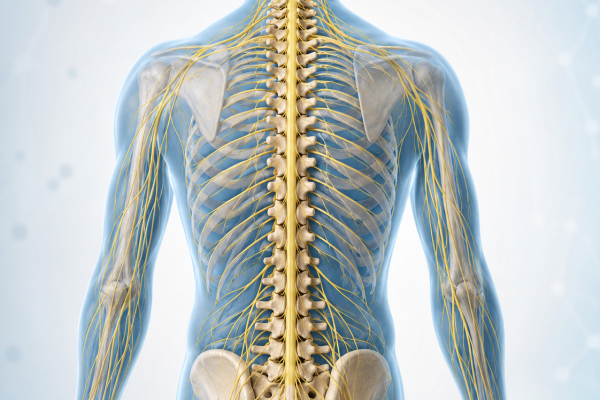
Your muscles can't do anything on their own. They need instructions. Harsh?
Maybe. But it's true: muscles are strong, but they're helpless without your nervous system. Without constant signals from your brain and spinal cord, your muscles wouldn't move at all.
Here's the frustrating part. Most people assume that a broken muscle causes muscle tightness, weakness, and cramping.
It isn't. The real culprit is almost always your nervous system. Once you understand that, everything changes about how you approach muscle tension and pain relief.
Think of your muscles like the strongest employee you've ever hired. Really strong. Capable of amazing work. But completely useless without clear direction.
Muscles are elastic tissue attached to bone. They create movement by shortening and lengthening.
Your bicep pulls your arm up. Your tricep stretches to allow it.
That coordination, that timing—none of it comes from the muscle. It comes from your nervous system.
Muscles can't work on their own. They can't decide to contract. They can't choose to relax.
They wait for instructions. Always. And those instructions come from one place: your nervous system.
Your brain and spinal cord are in charge. Right now, your nervous system is sending millions of signals to your muscles.
It's keeping you upright. It's adjusting your posture. It's keeping you breathing without effort.
When you stand up or walk across a room, your brain isn't controlling one muscle at a time. It's coordinating hundreds—maybe thousands—in perfect order. The timing has to be exact. The force has to be right.
If your nervous system sends the wrong signal to just one muscle, you'll feel it. That wrong signal shows up as weakness. Or tightness. Or cramp.
All three are nervous system problems. But they feel like muscle problems. So we treat the muscle. And it almost never works.
Here's the truth: muscle weakness, tight muscles, and cramp aren't problems with the muscle tissue itself. They're messages from your nervous system. Usually protective messages.
Say you have a tight hamstring. You've been stretching it for months. Daily. You've tried foam rolling, massage, even yoga. It's still tight. Why?
Your nervous system is telling that muscle to stay contracted. It's guarding something.
Maybe an old ankle injury changed how you walk. Your nervous system adapted by keeping your hamstring tight.
Maybe you sit at a desk eight hours a day. Your nervous system locked certain muscles up.
Whatever the reason, stretching won't fix it. You won’t understand it until you address the message you send.
Same with weakness. Tissue damage doesn’t make a muscle weak. It's weak because your nervous system isn't sending strong enough signals.
And cramp? That's your nervous system firing that muscle so hard it goes into spasm.
In all three cases, the muscle is just following orders. The problem is the order itself.
This is the key difference. When you treat the symptom—the tight muscle, the weak spot, the pain—you get temporary relief. Maybe.
A massage might loosen things for a day. Stretching might feel good for an hour. But if the nervous system dysfunction is still there, the problem comes back. Because your nervous system is still sending the same protective signal.
To fix muscle tension and restore normal function, you have to address the nervous system first. Only when the nervous system works correctly can stretching, yoga, and massage actually help. Until then, you're fighting against your own body's protective system. And your body always wins.
This is where the benefits of chiropractic medicine become clear. Chiropractic care doesn't spend most of its time on the muscle. It focuses on your spine and the nervous system running through it.
Your spine protects your spinal cord. Millions of nerve fibres branch out from there to every muscle and organ in your body. When vertebrae shift out of alignment or stop moving, they interfere with nerve function. That interference causes your nervous system to send faulty signals.
Weakness. Tightness. Guarding. Pain.
Chiropractor spinal adjustments restore proper alignment and movement. This removes the interference. Your nervous system can communicate clearly again. Your muscles respond to correct signals.
That's why someone might finally feel relief from a 'tight' muscle only after spinal adjustments—not stretching, not massage on the muscle itself, but correction of the spine disrupting the nervous system all along. The muscle was never the problem. It was just following bad orders.
If you've been stuck with persistent tightness, weakness, or pain that doesn't respond to stretching and massage, the missing piece is nervous system correction.
This is especially true if your symptoms resist standard treatments. Or if you've dealt with them for months or longer.
The good news: once you address the nervous system, change often happens fast. Muscles that wouldn't relax suddenly loosen. Weak spots regain strength.
Pain that lasts for years can drop dramatically. Why? Because you're finally treating the cause.
Lower back pain relief, shoulder tension, and neck stiffness often improve rapidly once you correct the nervous system. A full assessment that looks at your spine, your movement patterns, and how your nervous system controls your muscles is always step one.
From there, specific spinal adjustments correct the underlying nervous system dysfunction. Once you handle that, stretching, massage, and other techniques finally work.
They work with your body. Not against it. Find chiropractic care near me that takes this whole-picture approach, and that's when real change happens.
Q: If stretching doesn't fix my tight muscle, what will?
Address the nervous system. Your brain is telling that muscle to stay tight. Stretching fights that order.
Spinal adjustments and nervous system correction allow the signal to change. The muscle can finally relax. And this time, it stays relaxed.
Q: Can a muscle ever be genuinely weak, or is it always a nervous system problem?
True muscle damage does happen. But most weakness people feel in daily life is neurological.
The muscle tissue is fine. The nervous system just isn't activating it fully.
A proper assessment—including spinal evaluation—clarifies what you're dealing with. That's where chiropractor spinal adjustments and a thorough exam make the difference.
Q: I've tried everything for my back pain. Why hasn't anything worked?
You've probably treated the symptom, not the cause. Pain and tight muscles are signals. If you address the signal without fixing what triggers it, nothing changes.
A whole-body assessment identifies what's actually driving your pain. Whether it's spinal misalignment, movement dysfunction, or nervous system guarding, addressing the root cause is what works.
Q: Does this mean I should never stretch or get a massage?
Not at all. Once you correct your nervous system and your spine moves properly, stretching and massage become genuinely useful. They support your recovery. They help maintain what's been fixed.
But applying them before nervous system correction is like cleaning a computer screen to fix a virus. You're treating the symptom, not the problem. Do it in the right order, and everything changes.
Q: How do I know if my problem is nervous system-based?
If muscle symptoms—tightness, weakness, cramp, or pain—persist despite stretching, massage, or rest, and they've been present for weeks or longer, get a spinal and nervous system assessment. Most persistent muscle problems have a spinal or nervous system component. You can only know if someone trained to look at the whole picture evaluates you. That's what we do at Peak Chiropractic.
Persistent muscle tightness, weakness, or pain doesn't have to be permanent. But it won't change until you address what's actually causing it. A proper nervous system and spinal assessment is the first step. We'll identify exactly what's driving your symptoms and create a plan to fix the root cause—not just mask the pain. If you're tired of stretching and massage that only help for a day, it's time to try something different. Contact us today to book your assessment, or learn more about our approach to chiropractic care. Your nervous system is ready to send the right signals. Let's make that happen.