What Is a Slipped Disc? Why It's Not What You Think
Posted Jun 29, 2026 at 16:11

Posted Jun 29, 2026 at 16:11
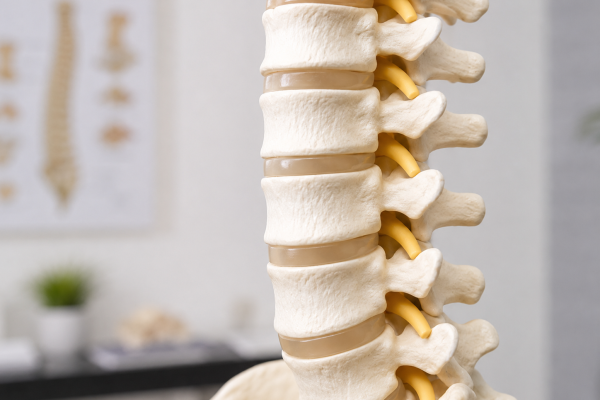
Most people who hear "slipped disc" imagine something catastrophic—a disc popping out of the spine like a bar of soap. In reality, a disc can't actually slip out. What happens is far less dramatic but still worth understanding: a disc develops a small tear, bulge or leak that may irritate nearby structures. The confusion matters because wrong mental images can make you more anxious than you need to be, and anxiety often delays the care that could help you find lower back pain relief.
At Peak Chiropractic, we've noticed that patients do better when they understand what's really happening inside their body. Clear answers calm nerves and help you make smarter choices about treatment.
Your spine is remarkably strong. It's built from bones, discs, joints, muscles, ligaments and nerves all working as one system. This design lets you bend, twist, lift and move while protecting the delicate spinal cord inside.
A spinal disc sits between two vertebrae—those are the bones stacked on top of each other. Think of it like a jam doughnut. The outer ring is tough and fibrous. The centre is softer, more gel-like. Each disc acts as a shock absorber, allows movement and keeps space open for nerves to exit the spine.
You have 23 discs running through your neck, mid back and lower back. They've been handling years of movement, sitting, standing and the occasional awkward lift. They're tougher than you'd think.
Here's what doesn't happen: a disc doesn't slide out from between two bones and stay out, the way a car wheel might slide off an axle.
Here's what can happen: the outer layer of a disc can develop tiny cracks or tears. When that happens, the softer centre can bulge or leak through the damaged spot. If that bulge or leak presses near a nerve, it may cause pain, pins and needles, numbness or weakness.
This is why calling it a "slipped disc" is misleading. Better terms are:
None of these sound as dramatic. But none of them mean your spine is broken or about to collapse.
Language shapes how we feel and what we do. If you believe your disc has "slipped," you might become afraid to move. You might assume your spine is weak or damaged beyond repair. That fear can actually slow your recovery.
The truth: most disc issues improve over time, especially when you move well and get the right support early. Understanding this difference between the myth and the reality is your first step toward better outcomes.
Disc problems show up in different ways depending on which disc is affected and how much it's pressing on nearby structures.
Common signs include:
Important note: These symptoms don't automatically mean you have a disc issue. Other problems—muscle strain, joint dysfunction, nerve irritation from tight muscles—can cause the same signs. That's why the first step is always a proper assessment.
If you're searching for lower back pain relief or wondering whether to see a back pain chiropractor near me, getting checked is the only way to know what's actually going on.
Good care starts with a clear diagnosis. During your first visit, a chiropractor will:
This assessment matters because one person's lower back pain is not the same as another's. Two people with similar pain might need completely different approaches.
At Peak Chiropractic, we look at how your whole system is working—spine, joints, muscles, nerves—not just the painful spot. Then we build a plan around what we actually find, not what we assume.
Many people with disc-related pain improve with chiropractic care, especially when they start early. The goals are usually:
This might involve spinal adjustments, soft tissue therapy, movement education, targeted exercises and advice on posture and daily habits. It's rarely just one treatment; it's usually a combination that addresses both the immediate problem and the habits that created it.
People often look for chiropractic care near me or chiropractic treatment for sciatica when pain radiates down the leg—a common sign that a disc is irritating a nerve. Peak Chiropractic serves people across Stoke-on-Trent, Leek and Ashbourne with disc-related pain, sciatica, lower back problems and movement restrictions.
Not every disc problem is right for chiropractic care. If your issue is severe, rapidly worsening or causing loss of bladder or bowel control, you need urgent medical evaluation. We'll always tell you honestly if we think you need a different type of specialist.
Our goal is to get you the right care—even if that's not with us.
A slipped disc isn't the catastrophe the name suggests. But it does need attention. The longer pain lingers, the more your movement pattern changes, and the harder recovery becomes.
If you have back pain, leg pain, pins and needles or any of the symptoms described here, the first step is understanding what's causing it. Book a consultation with Peak Chiropractic to get answers and a clear plan.
Book your initial consultation or contact our team if you have questions before booking.
Can a disc really slip out of place? No. A disc stays between the bones; it can't slip out like a soap bar. What happens is a tear, bulge or leak that may irritate nearby nerves. The term "slipped disc" is misleading but widely used.
What does a disc issue feel like? Disc problems cause lower back pain, pain down one or both legs, pins and needles, numbness, weakness or pain that changes with position. Symptoms depend on which disc is affected and whether it's pressing on a nerve.
Can chiropractic care help disc pain? Yes, for many people. Chiropractic care aims to restore movement, reduce nerve irritation and strengthen supporting muscles. The key is early assessment and a plan tailored to what we find, not generic treatment.
When should I seek urgent medical help? Go to hospital or urgent care if you lose bladder or bowel control, have numbness around the groin or saddle area, experience severe leg weakness, or your symptoms are rapidly worsening—these may signal a serious condition.
Where can I get back pain treatment near me? Peak Chiropractic has clinics in Stoke-on-Trent, Leek and Ashbourne. We assess and treat disc-related pain, sciatica, lower back problems and movement issues. Contact us or book a consultation to get started.