What to Expect From Your First Visit
Posted Aug 19, 2026 at 10:54

Posted Aug 19, 2026 at 10:54
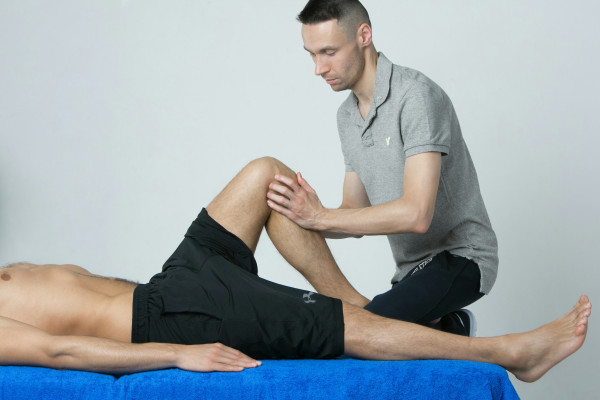
Many of the people we meet want to understand exactly what we do and how we can help, so here's a full breakdown of what to expect from your first session with us.
First, we want to know about you. What are your roles in life? Are you a parent, a partner, an animal lover, an athlete? We want to understand exactly what activities matter to you day to day, and what you'd like to get back to doing again.
This isn't idle curiosity. We want to know which areas of your life are being affected by your symptoms, or which areas you'd like to develop further. We also want to know who else is affected. If back pain is stopping you from playing with your kids, or affecting your relationship with your partner, it's no longer just you being impacted, and we want to understand what needs to change to improve things for everyone involved. Understanding what's genuinely at stake if nothing changes, and why it matters to you specifically, helps us build a truly tailored assessment.
Once we understand how your symptoms are affecting your life, we need to figure out what's actually happening physically. Our assessment breaks down into three parts, each answering an important question.
We start by understanding how your body is functioning right now. We check joint movement for restrictions, confirm your reflexes are present and equal, and test key muscles for strength. This tells us whether anything needs further investigation, such as a referral back to your GP, or in rare cases, straight to A&E if something more serious is suspected. If no referral is needed, that's genuinely good news, since it means it's something we can help with directly.
Most people notice some changes as we go through this part of the assessment: a joint that's a little stiff, or a muscle that seems weaker or less controlled than expected. Knowing what's happening in the soft tissues matters, but it's not enough on its own to know how to actually resolve it, which brings us to the second part.
Sometimes the cause is obvious. A recent accident or direct trauma to the area usually explains things fairly clearly. More often, though, it's something that's been building for years, gradually getting worse until it finally reached a point you're ready to address.
This is also where our approach genuinely differs from most other practitioners you may have seen. We want to look at your brain. It's less intimidating than it sounds, but since your brain controls everything your body does, we want to understand why it's directing your body in a way that's causing pain or limiting function.
We use six research-backed assessments to examine how well your brain and body are communicating, and to identify where any breakdown is happening. This gives us insight into why your body is functioning the way it currently is, and highlights any compensatory patterns you've developed along the way. None of these assessments are invasive; they simply involve specific movements or activities that reveal information about your function.
At this point, we know what's going on and why. There's one more essential piece before recommending a treatment plan: understanding your body's actual capacity to heal.
Four tests make up this part of the assessment, giving us a sense of how full your "fuel tank" currently is. Strong scores suggest your body is well-positioned to heal and recover efficiently. Lower scores suggest your body is closer to its limits, meaning recovery is likely to take longer.
We check oxygen saturation to confirm your tissues are getting what they need to function normally. Forced expiratory volume, one of the most important measures of lung function, comes next. Third is bilateral blood pressure, giving insight into circulatory health. Finally, heart rate variability indicates how well your body adapts to and copes with stress. Together, these four measures show how efficiently your body can heal, and therefore how long resolving the issues identified in parts one and two is likely to take.
The final step is a digital postural analysis, an excellent way to see how everything we've assessed is actually showing up physically.
With all of this information gathered, we can build a genuinely tailored plan for exactly what your body needs to heal and address the root cause behind your symptoms, not just manage them.
If you're researching a chiropractor near me because you want an assessment that goes beyond a quick look at the painful area, this is exactly the kind of thorough process worth looking for. Choosing chiropractic near me built around this level of detail means your plan is genuinely built around you, not a generic protocol.
If you're interested in finding out what's going on, why it's happened, and how we can help resolve what you're currently dealing with, get yourself booked in for a consultation with us now.
Why do you ask so many questions about my life before the physical assessment? Understanding how your symptoms affect your daily life and relationships helps build a genuinely tailored assessment, rather than a generic one that only looks at the painful area.
What happens if the assessment reveals something more serious? If something requires further medical attention, we'll refer you to your GP, or in rare cases directly to A&E, rather than proceeding with treatment ourselves.
Why does the assessment involve looking at brain and body communication? Since the brain controls everything the body does, understanding how well they're communicating helps identify why your body is functioning the way it currently is, not just where it hurts.
What do the four "recovery capacity" tests actually measure? Oxygen saturation, lung function (forced expiratory volume), bilateral blood pressure, and heart rate variability, together giving an indication of how well and how quickly your body can heal.
How long does a full initial assessment like this typically take? It varies, but because it covers three distinct areas (current function, root cause, and recovery capacity) alongside postural analysis, it's generally more thorough and takes longer than a standard consultation.