Why a Chiropractor Could Be Part of the Answer
Posted Aug 18, 2026 at 10:32

Posted Aug 18, 2026 at 10:32
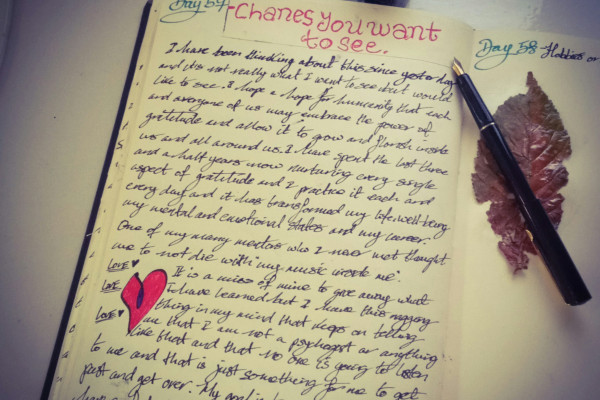
"What are you grateful for?" has always come across as a slightly condescending question, if I'm honest. But while meditating recently using the Smiling Minds app, a guided session on exactly this topic caught my attention in a way it hadn't before.
A couple of minutes in, the guide asked me to "think of everything I'm grateful for," and I genuinely drew a blank. The only things that came to mind were broad and obvious: family, loved ones, work.
The guide then offered examples that genuinely shifted my perspective, pointing toward things like simply being alive, the ability to breathe, having a body that works, and even the people who grow the food that ends up on my plate.
It made me think seriously about how much has had to happen, both in the present and across history, for me to end up exactly here, right now. Squandering that, after everything that led to this exact moment, would be a genuine waste.
Think about how often we wish time away. "I can't wait for this week to be over." "This holiday can't come soon enough." "Only 30 months and 12 days until I retire." We willingly trade away the time we actually have, chasing some imagined "better" point further down the line, when the real gift was the time itself.
Here's something worth sitting with: we may be one of the first generations to become sicker than the one before us. Despite unprecedented technology, knowledge, and scientific progress, and the relative absence of war and mass poverty by historical standards, we appear to be growing less healthy as a population.
Research suggests deaths from heart attack and stroke have climbed steadily over the past three decades. Diabetes prevalence has risen sharply worldwide since 1990. And rates of lower back pain have increased across all age groups between 1990 and 2017.
Being genuinely grateful can't just live in your head. Thinking "I'm grateful for this" isn't enough on its own; our actions need to reflect it too. Actions, after all, tend to speak louder than words.
So what actually needs to shift, at a societal level, to reverse this current trajectory? What could your own family change today to help the next generation end up healthier rather than sicker? And more immediately: what could you change right now to improve your own current state of health?
That's ultimately the real question. Whether it's a chiropractor, a personal trainer, or a counsellor, facilitating genuine change usually takes more than good intentions alone.
If you're researching a chiropractor near me because you're serious about actually changing your trajectory, not just thinking about it, that's a genuinely solid place to start. Choosing chiropractic near me that treats health as an ongoing, active commitment, rather than a passive hope, can be part of turning gratitude into something that actually shows up in how you live.
Why is gratitude considered important for health? Genuine gratitude has been linked to improved mental wellbeing and lower stress, but its real value tends to show up when it translates into actual behaviour change, not just a passing thought.
Is it true that younger generations are becoming less healthy than older ones? Research points in that direction for several measures, including rising rates of certain chronic conditions, despite major advances in medicine, technology, and general living standards.
Why has lower back pain become more common over the decades? Several factors are thought to contribute, including more sedentary lifestyles, though the exact causes are complex and vary between individuals and populations.
How can I turn gratitude into real action rather than just a feeling? Start by identifying one specific, small change tied to something you're genuinely grateful for, like your health or time, and commit to it consistently rather than only reflecting on it mentally.
Who should I turn to if I want to make a genuine change to my health? It depends on your specific goals, but options like a chiropractor, personal trainer, or counsellor can each play a role, often working best in combination rather than in isolation.