Why a Sports Therapist Explains How Exercise Works
Posted Jul 28, 2026 at 09:56

Posted Jul 28, 2026 at 09:56
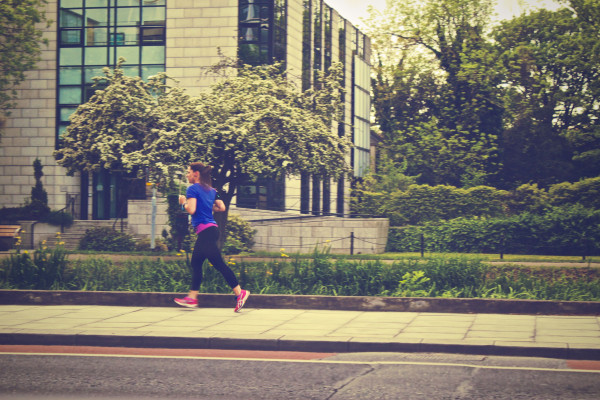
We're constantly told that exercise is good for us, and most of us accept that without question. But what's actually happening inside your body when you go for a run, hit the gym, or head out for a swim? Understanding the mechanics behind it makes the advice a lot easier to take seriously.
When you exercise, your heart rate increases because your muscles suddenly demand far more oxygen and fuel, both of which travel through your bloodstream. That increased demand forces your heart muscle to work considerably harder, and just like any other muscle in the body, a new stimulus like this causes it to adapt, grow, and get stronger over time.
A stronger heart muscle means that, at rest, your heart rate settles lower and each individual beat pumps more blood around your body. This creates significant efficiency, reducing overall stress on the heart while improving your general health in the process. Studies suggest that resting heart rate is actually a strong indicator of life expectancy, which says a great deal about why this adaptation matters so much.
Understanding how your heart and muscles respond to training is exactly the kind of knowledge a sports therapist near me can help you apply properly, whether you're just starting out or building towards a specific goal. Training smartly, rather than simply training hard, makes a genuine difference to how quickly and safely your body adapts.
Alongside your heart, the other muscles throughout your body improve in both strength and size as you continue to exercise regularly. During exercise, muscle tissue actually becomes slightly damaged at a microscopic level. Your body then repairs this damage, rebuilding the muscle bigger and stronger than before. That's precisely why, the day after a run or swim, you often feel a little sore, with muscles that stay tight for the following day or two.
This soreness has an actual name: Delayed Onset Muscle Soreness, commonly shortened to DOMS. The encouraging part is that as you keep exercising consistently, you experience DOMS less and less over time. Your muscles genuinely are getting stronger, because you're doing progressively less damage relative to your improving fitness level, and the overall stress you're placing on your body reduces as a result.
If DOMS or a nagging niggle is holding your training back, sports therapy near me can help you recover more effectively between sessions and reduce the risk of it turning into a genuine injury. Our sports therapy team in Ashbourne combines hands-on treatment with tailored plans designed to help you train consistently without setbacks, while our Leek clinic takes a similarly personalised approach for anyone managing joint pain or post-injury recovery.
A stronger heart and improving muscles aren't the only adaptations exercise produces. You'll also notice yourself becoming considerably more out of breath, with your breathing rate climbing from roughly 15 breaths per minute at rest to somewhere between 40 and 60 breaths per minute during intense effort.
This happens because your working muscles produce carbon dioxide as a by-product, which your body needs to expel through your lungs via a process called gas exchange, the swapping of carbon dioxide and oxygen across the lung wall. With consistent, prolonged exercise, this entire process becomes progressively more efficient, which explains why you're able to do more without feeling quite as breathless as you once did.
Sometimes it isn't fitness holding you back but an old or recurring issue that flares up whenever training intensity increases. If that sounds familiar, working with a chiropractor for sports injuries can help identify what's actually driving the problem, rather than simply managing the symptom each time it resurfaces. Speaking with our team is a straightforward way to find out what's really going on.
Why does resting heart rate matter so much for health?
A lower resting heart rate generally reflects a stronger, more efficient heart, and research links it to better long-term health outcomes.
Is DOMS a sign that something's wrong?
No, DOMS is a completely normal response to new or increased training, and it typically eases as your fitness improves.
How long does DOMS usually last?
It commonly peaks around 24 to 48 hours after exercise and generally resolves within a few days as the muscle repairs itself.
Can a sports therapist near me help prevent injuries, not just treat them?
Yes, addressing movement patterns and muscle imbalances proactively is often just as valuable as treatment after an injury occurs.
Should breathlessness during exercise ever be a concern?
Some breathlessness during effort is entirely normal, but sudden, severe, or unusual breathlessness should always be checked by a medical professional.