Why Chiropractic Care Looks Beyond Basic Exercises
Posted Aug 11, 2026 at 11:11

Posted Aug 11, 2026 at 11:11
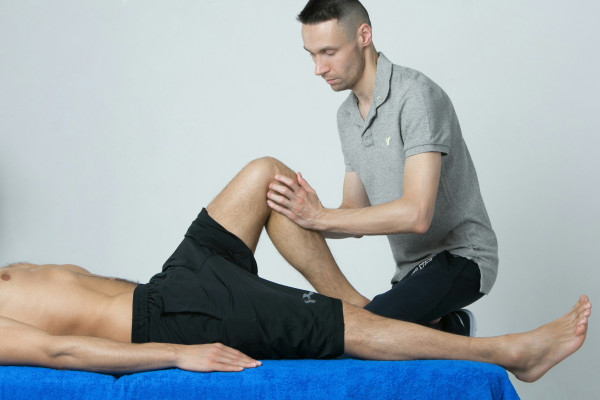
Exercise plays a huge role in healthcare across this country. Most clinicians recommend stretching or strengthening exercises to do at home, either alongside or after a course of treatment, and some professions rely on exercise-based care entirely. But does prescribing exercises make someone a good clinician? Or, flipping that question, does skipping them make someone a bad one?
At Peak, we believe handing out exercises purely to stretch or strengthen a tissue is often a waste of time when the goal is genuine, long-term health. That's our initial position, anyway, and it's worth explaining why.
Stretching offers a short-term fix, particularly for pain. Stretching a muscle can absolutely bring relief, but that same muscle is likely to tighten back up soon after, needing more stretching all over again. We'd rather identify why the muscle became tight in the first place and correct that directly. It's the difference between fixing a crack in a wall and simply papering over it each time it reappears.
Strengthening exercises follow a similar pattern. In a body that's functioning correctly, "muscle imbalances" shouldn't really occur in the first place. Rather than repeatedly working a weak muscle to build it up, we'd rather help the muscles in your body activate properly by restoring their full neurological supply first. Strength built on top of a muscle that isn't firing correctly tends to be less stable than strength built once that connection is working as it should.
Once that foundational work is done, targeted exercises can be a fantastic addition to your care. They're just not the starting point, and they're not required before meaningful progress can happen.
If you're researching chiropractic near me because you've been handed exercises before without lasting results, it's worth understanding this distinction. Our approach to assessing nervous system and muscle function focuses on why a muscle behaves the way it does, rather than jumping straight to a generic exercise sheet.
Choosing chiropractic care near me with this philosophy in mind means exercises, when they're used, come after the root cause has been addressed, not as a substitute for addressing it. Our structured six-step process is built around identifying that root cause first.
Does this mean exercises are pointless? No. Exercises can be a genuinely useful part of your care, particularly once the underlying cause of tightness or weakness has been addressed. They're an accompaniment, not a replacement for that work.
Why does a muscle become tight again after stretching? Stretching addresses the symptom rather than the cause. If the reason the muscle tightened in the first place isn't corrected, it's likely to return to that same state fairly quickly.
What are "muscle imbalances," and why do they happen? Muscle imbalances describe uneven strength or activation between muscle groups. In a body functioning correctly, this shouldn't be a common occurrence, which is why addressing the underlying cause matters more than simply strengthening the weaker side.
What does "full neurological supply" mean for a muscle? It refers to a muscle receiving accurate, complete signals from the nervous system, which allows it to activate and function properly, rather than working around a restricted or incomplete connection.
Is a bad clinician one who prescribes exercises? Not at all. Exercise-based care is a legitimate and common approach. The distinction here is about sequencing: addressing the root cause before, or alongside, prescribing exercises rather than relying on exercises alone.