Why Pain, Not Tissue Damage, Justifies Surgery
Posted Aug 14, 2026 at 12:06

Posted Aug 14, 2026 at 12:06
Have you ever thought about what the single largest contributing factor is for musculoskeletal surgery? The answer might genuinely surprise you.
By MSK surgery, we mean procedures like discectomies, hip or knee replacements, labrum repairs, and arthroscopies. Despite taking place on completely different parts of the body, these procedures share one key thing in common. Without it, most wouldn't go ahead at all. Any guesses?
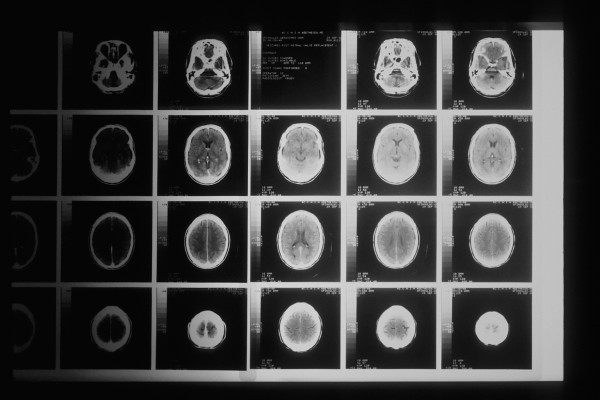
If you guessed tissue damage or injury, that's a reasonable assumption, but not quite right. The biggest contributing factor is actually pain. It's genuinely strange when you consider that 99% of the time, a doctor or orthopaedic consultant uses an X-ray or MRI to justify grounds for surgery, yet the real deciding factor is something imaging can't show, prove, or identify at all: pain itself.
A client recently shared a striking example of this. A doctor had called after reviewing MRI results, explaining that surgery was needed on one or two lumbar discs. The client responded by explaining they were no longer experiencing intense pain, hadn't had any referred neural symptoms like pins and needles, numbness, or foot weakness, and had actually just walked seven miles through the countryside. They'd stopped taking medication or painkillers entirely and felt considerably better.
This came as a genuine surprise to the doctor, who then said that, given all that, surgery was no longer necessary and the conservative route of care could continue. What's a real shame, though, is that the doctor never asked how the client had gotten to that point in the first place.
So what genuinely changed during that conversation? Certainly not the MRI results, which still showed two discs technically meeting the criteria for surgery. The only thing that changed was the client's symptoms. Which raises an obvious question: which one actually determines whether surgery happens, the imaging showing tissue damage, or the symptoms? Clearly, the symptoms. That's the only variable that shifted, and the recommendation for surgery shifted right along with it.
Here's a way to picture this clearly. Imagine identical twins with the exact same MRI results, down to the millimetre. Twin A is in pain, experiencing pins and needles and other symptoms. Twin B feels nothing at all and is completely pain-free. Twin A now has grounds for surgery. Twin B doesn't, despite the imaging being identical.
This entire piece rests on one central idea: tissue damage does not automatically equal symptoms. Osteoarthritis, bone spurs, and disc prolapses show up in nearly everyone to some degree. But whether pain is present, how severe it is, and where it's felt, that varies enormously from person to person, regardless of what the scan shows.
Tissue damage doesn't equal symptoms.
Does having a disc prolapse or bone spur on a scan mean I need surgery? Not necessarily. Findings like these are common and show up in many people without any pain at all. Surgery decisions typically hinge on symptoms rather than imaging findings alone.
Why do doctors use MRI or X-ray results to justify surgery if pain is the real factor? Imaging helps confirm a structural explanation for symptoms and rules out other causes, but it's ultimately the presence and severity of symptoms that tends to determine whether surgery is genuinely necessary.
Can symptoms improve even if the MRI results stay the same? Yes, as the example in this piece shows. A person's symptoms can resolve significantly even though the underlying imaging findings remain unchanged.
What does the twin analogy actually illustrate? It shows that identical tissue damage on a scan doesn't guarantee identical symptoms or treatment needs. Two people with the exact same MRI results can have very different experiences of pain.
If my symptoms improve, should I still consider surgery my doctor recommended? This is a conversation to have directly with your doctor. Sharing how your symptoms have changed is genuinely relevant information that can affect the recommendation, as shown in the example here.