Why We Look Past the MRI When Treating Sciatica
Posted Aug 21, 2026 at 16:32

Posted Aug 21, 2026 at 16:32
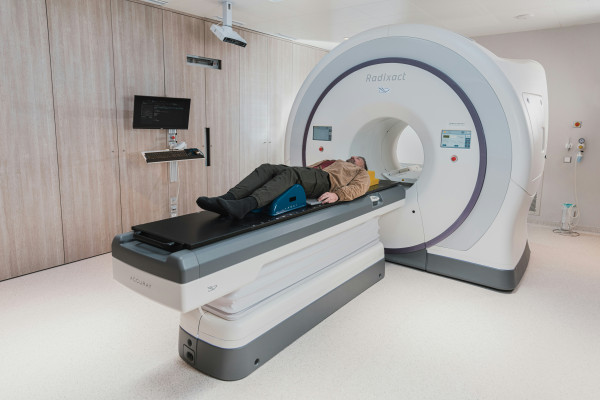
If I had a penny for every time someone self-diagnosed a disc bulge, or told me their decade-old disc bulge was still the reason behind their current pain, I'd have made this year's Forbes list without question. Disc bulge, prolapse, herniation, "slipped disc": these terms get thrown around constantly in our line of work, and they get considerably more blame than they genuinely deserve.
To be clear, symptomatic disc issues are relatively common, and when they genuinely cause a problem, they cause a real, significant problem. Nobody would wish those particular symptoms on anyone at all. But here's something genuinely worth knowing: you can have multiple disc bulges present and still be completely symptom-free throughout.
A client recently came to me for help with lower back pain that referred down their leg into their foot, a fairly classic sciatica-type presentation. They'd already been to the NHS, who told them it was a disc bulge and had them waiting on a referral for an MRI scan to properly confirm it.
They were understandably upset by this news. They'd heard genuine horror stories about disc bulges in the past, and had also been told it was probably something they'd simply have to live with from now on. After some convincing, they agreed to start regular adjustments with us, alongside gradually changing years of habits that had built up leading to this particular point.
After around six weeks, a considerable number of their symptoms had either cleared up entirely or reached a stage where they could genuinely start living their life again. Not long after this, they finally went for their MRI, and the results came back within two weeks.
When the results arrived, the practitioner explained that it was no wonder they'd been in so much pain, since the scan did indeed show a disc bulge in the lower back, and suggested exploring injections or surgery to address it directly. Here's the genuinely confusing part: this particular MRI had been taken after the client had already experienced huge improvement in their health while under our ongoing care.
This isn't as unusual as it might initially sound. Recent studies have found that around 20% of young adults, and more than 75% of people over the age of 70, have disc bulges clearly visible on MRI scans while remaining completely symptom-free throughout. A scan showing a disc bulge doesn't automatically explain the pain someone happens to be experiencing, and it certainly doesn't mean surgery is the only realistic path forward from here.
For me, this particular case highlights something genuinely important: the real value of not treating someone based purely on a specific diagnosis tied to one specific area, and instead aiming to improve function across the entire system. A sciatica chiropractor near me who only looks at the scan result runs a real risk of missing the bigger picture entirely, since the image alone rarely tells the full story of what's actually driving someone's ongoing symptoms.
It also raises a genuinely uncomfortable question: how many unnecessary back surgeries happen every year when more conservative options could have been tried first?
If you've been told a disc bulge is the reason for your pain, it's genuinely worth remembering that imaging is only one piece of a much larger puzzle. Proper chiropractic treatment for sciatica looks at how your whole body is functioning together, not just what shows up on a single isolated scan. If leg pain, numbness, or persistent lower back discomfort has been affecting your daily life, a thorough back pain chiropractor near me can assess what's genuinely driving your symptoms before surgery ever becomes the only option left on the table. Our back pain treatment page explains more about the common causes we look for, and our structured six-step process shows how we build a plan around your specific situation. When you're ready, get in touch with your local clinic to find out more.
Does a disc bulge always cause pain?
No. Research shows a large proportion of people with disc bulges on MRI have no symptoms at all, which means a scan result alone doesn't fully explain someone's pain.
Should I avoid getting an MRI if I have back or leg pain?
Not necessarily. Imaging can still be useful, but it works best alongside a full functional assessment rather than being treated as the only piece of information that matters.
Can conservative care help before considering surgery?
Often, yes. Many people see meaningful improvement through conservative approaches, which is worth exploring before more invasive options are considered.
Why did the client's pain improve before the scan confirmed a disc bulge?
Because pain and imaging findings don't always move in step with each other. Function can improve significantly even while a structural finding remains visible on a scan.
Is sciatica always caused by a disc problem?
Not always. Sciatica-type symptoms can stem from several different causes, which is exactly why a full assessment matters more than a single diagnosis.