Why We Tests Your Balance
Posted Aug 18, 2026 at 10:49

Posted Aug 18, 2026 at 10:49
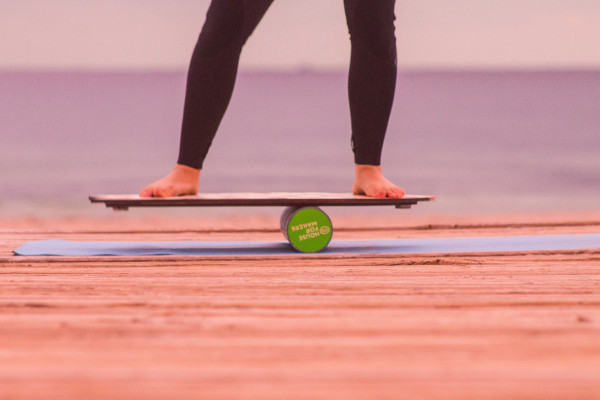
Balance is one of the components that make up our vitality score in the clinic, and there are several genuine reasons why. It's a valid, measurable way of assessing how well your nervous system is functioning and how you're doing overall. Balance isn't just about avoiding falls, or nailing a tricky yoga pose. A lack of balance can actually be a sign of underlying health issues.
Research published in the British Journal of Sports Medicine found that people better able to balance on one leg after the age of 50 tend to live longer. The study suggested that people in this age group unable to balance on one foot for 10 seconds or more were more likely to die within the following decade.
The research also indicated that balance ability can generally be preserved well into someone's 60s and beyond, which makes it a genuinely useful indicator of life expectancy.
Many things change in the body as we age, and balance is one of them. It can decline quite quickly, bringing a range of other issues with it, including a heightened risk of falling, which is the second leading cause of unintentional injury deaths worldwide. Surprisingly, balance isn't part of routine health check-ups, despite a growing body of research showing it to be a genuinely strong marker of overall health.
The study analysed data collected between February 2009 and December 2020, involving 1,702 participants aged 51 to 75. On average, participants' ability to balance on one leg declined with age, and those managing weight or diabetes-related issues were more likely to fail the test.
The results were notably significant in favour of those with better balance. Participants who failed the test were 1.84 times more likely to die within the following decade compared to those who passed. It's worth being clear that this is a correlation, not a proven cause-and-effect relationship, as the researchers themselves note. Even so, the fact that balance offers such a simple, accessible way to gauge overall health and fitness remains genuinely compelling.
Balance can be influenced by a range of factors: spinal joint restrictions, long-term alcohol use (which can lead to changes in the cerebellum), vertigo, and other inner ear issues, among others. Regardless of the specific cause, the one-leg balance test offers genuinely useful feedback on your overall health and fitness.
The researchers behind the study suggest performing the one-leg balance test daily, such as while brushing your teeth, treating it as a simple barometer of your wellbeing. The aim is to hold the position for at least 15 seconds. While the study focused specifically on the 50-plus age group, there's nothing stopping anyone, at any age, from trying it at home, aiming for a longer hold time, or challenging themselves further by closing their eyes.
There are several other easily measured health indicators worth being aware of, including grip strength (which we also measure in the clinic), walking speed, and how easily you're able to get out of a chair unassisted.
In the clinic, we run a series of tests measuring how well your nervous system is functioning, alongside your overall health and fitness, because we genuinely believe you shouldn't have to wait for a problem to develop before addressing it. The goal is optimal health, so problems are less likely to occur in the first place, and if they do, you're in a genuinely stronger position for a quick recovery.
If you're researching a chiropractic clinic near me that measures things like balance as part of a proactive approach to health, rather than waiting for symptoms to appear, it's worth asking what a clinic actually tests before you start care. Choosing a genuinely local chiropractor near me makes it easier to build this kind of ongoing tracking into your routine consistently.
If you'd like to get checked, get yourself booked in for one of our screening days or an initial consultation.
How long should I be able to balance on one leg? Research suggests aiming for at least 10 seconds as a baseline, with 15 seconds or more considered a genuinely good target, particularly for people over 50.
Does poor balance always mean something serious is wrong? Not necessarily, but it's worth investigating. Balance can be affected by a range of factors, from joint restrictions to inner ear issues, so it's a useful starting point for a proper assessment rather than a diagnosis on its own.
Can balance really predict how long I'll live? Research has found a genuine correlation between one-leg balance ability and mortality risk in people over 50, though the researchers are clear this shows correlation, not a direct cause-and-effect relationship.
Is the one-leg balance test only relevant for older adults? The original study focused on ages 51 to 75, but there's no reason people of any age can't try it, ideally aiming for a longer hold time or adding a challenge like closing their eyes.
What other simple tests can indicate overall health? Grip strength, walking speed, and how easily you can stand up from a chair unassisted are all straightforward, accessible indicators worth knowing about alongside balance.