Your Back Pain Might Not Start In Your Back.
Posted Aug 21, 2026 at 18:14

Posted Aug 21, 2026 at 18:14
Society has been trained to look for the cause of a problem in the exact area that hurts. Back pain means an X-ray of the back. Ankle pain means an MRI of the ankle. That is simply how mainstream healthcare tends to operate across the UK.
The trouble is, that model rests on a flawed assumption about how the body actually works. It treats the body like a four-legged table: put one hundred kilograms of weight over a single corner, and that corner is the one that breaks. Damage stays local, in other words, exactly where the force was applied.
That assumption simply does not hold up. The human body behaves as what is known as a tensegrity model, meaning tension, compression, and stretch are shared across the entire structure, regardless of where a force is first applied. The concept was originally developed by R. Buckminster Fuller, an architect and inventor from the early twentieth century whose structural work remains widely recognised today.
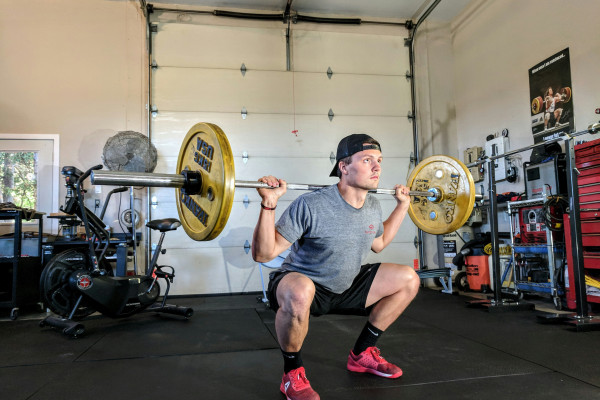
Tensegrity is already well accepted when it comes to athletic performance. When an athlete drives into the ground with their feet during a heavy lift, that force travels through the entire body, helping to generate power through the chest and arms. Nobody questions that the body works as a connected, load-sharing system when performance is the goal.
What makes far less sense is why this same principle gets abandoned the moment we shift from performance to injury or dysfunction. If tensegrity genuinely improves optimal function, logic suggests it must work in both directions. A change anywhere in the structure should be capable of creating strain somewhere else entirely.
Take a fractured elbow as an example, treated with pins and a cast for three months. That period of restricted elbow movement inevitably changes the forces and strain distributed through the rest of the body, even once the elbow itself has technically healed.
The human pelvis functions specifically as a release valve for internal pressure moving through the body, which helps explain why lower back pain is consistently the most common pain complaint worldwide, affecting roughly ninety percent of people at some point. Given that role, it becomes reasonable to assume that a long-term change in elbow function could increase forces and strain elsewhere, most often showing up as pain in the lower back, the body's natural pressure-release point.
The solution here is not to X-ray, massage, or crack the painful area itself. A more effective approach involves finding the true root cause, in this case the dysfunctional elbow, and resolving that directly, which sits at the heart of our wider approach to identifying the real cause of your symptoms rather than chasing the loudest signal.
This is precisely why a genuinely thorough back pain chiropractor looks well beyond the site of your pain. Our detailed assessment and treatment process for back pain considers how restrictions elsewhere in the body, old injuries, past surgeries, or long periods of altered movement, could be contributing to strain building up in your lower back over time.
A lower back pain chiropractor working from this model will look at your whole structure rather than assuming your back is somehow the source of its own problem. Treating only the site of pain rarely resolves anything permanently, because the true stressor often sits somewhere else in the chain entirely.
If you are searching for a chiropractor for back pain, or browsing chiropractic care near me, it is worth asking whether a clinic considers your whole-body mechanics or simply treats the painful spot. For more widely recognised evidence supporting tensegrity within the body, the work of Tom Myers on Anatomy Trains and fascial lines is well worth exploring further.
What does tensegrity mean in relation to the human body?
It means tension, compression, and stretch are distributed throughout the whole body rather than staying isolated to wherever a force was applied, so problems in one area can create strain elsewhere.
Can an old injury really cause pain somewhere completely different?
Yes. Restricted movement in one joint, such as a previously fractured elbow, can gradually shift strain and force through the rest of the body, often surfacing as pain somewhere else entirely.
Why is lower back pain so common?
The pelvis acts as a natural pressure-release point for strain moving through the body, which is a major reason lower back pain is the most frequently reported pain complaint worldwide.
If my back hurts, why look elsewhere for the cause?
Because the site of pain and the true cause are often different. Addressing only the painful area, without finding what is actually driving the strain, tends to bring the problem back.
Who developed the tensegrity model referenced here?
The concept originates with R. Buckminster Fuller, an early twentieth-century architect, and has since been applied extensively to the human body by researchers including Tom Myers.