Frozen Shoulder Treatment in Stoke-on-Trent, Leek & Ashbourne
Peak is dedicated to finding the body's true stressor points, meaning people can enjoy long lasting improvements in their health, allowing them to get back to doing the things they love in life.
If you are struggling with ongoing shoulder pain and stiffness, members of our Osteopathic team can provide tailored frozen shoulder treatment to help restore mobility and reduce discomfort. We focus on addressing the underlying causes, rather than simply managing symptoms, so you can return to normal daily activities with confidence.
Understanding Frozen Shoulder
Frozen shoulder, also known as adhesive capsulitis, is a condition where the shoulder joint becomes painful and gradually loses its normal range of motion. It typically develops slowly, worsening over time, and can last for months or even years without treatment.
The condition progresses in four stages:
- Pre-freezing - Pain starts to become noticeable.
- Freezing stage – Increasing pain and stiffness.
- Frozen stage – Stiffness remains, but pain may lessen.
- Thawing stage – Gradual improvement in movement and function.
At Peak, we specialise in helping patients manage and overcome frozen shoulder by targeting both pain and restricted movement with a personalised treatment plan.
Stoke on Trent
5 Broom St,
Hanley,
ST1 2ER
01782 499 670
Leek
87 Haywood Street,
Leek,
ST13 5JH
01538 828 005
Ashbourne
5 Victoria Square,
Ashbourne,
DE6 1GG
01335 418 709
Frozen Shoulder Symptoms
Typical signs of frozen shoulder include:
- Persistent, deep shoulder pain
- Stiffness that restricts arm movement
- Difficulty lifting the arm overhead or behind the back
- Pain that worsens at night or when lying on the affected shoulder
- Gradual loss of range of motion over time
If left untreated, these symptoms can significantly affect daily activities such as dressing, reaching, and lifting.

Find Out How We Can Help You
Causes of Frozen Shoulder
While the exact cause isn’t always clear, several factors increase the risk of developing frozen shoulder, including:
- Prolonged immobility (e.g. after injury or surgery)
- Diabetes and other metabolic conditions
- Age (most common between 40–60)
- Shoulder trauma or repetitive strain
- Inflammatory conditions affecting the joint capsule
How Peak Treats Frozen Shoulder
Unlike approaches that only focus on temporary pain relief, our treatments aim to restore mobility and improve long-term shoulder health.
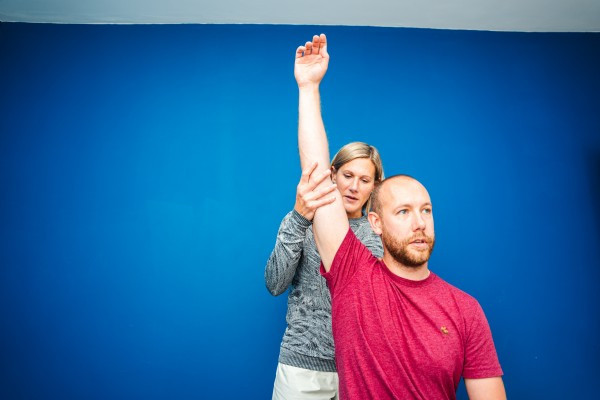
At Peak, we begin with a full assessment of your posture, movement, and shoulder function. Based on this, we create a tailored frozen shoulder treatment plan which may include:
- Manual therapy and gentle mobilisation to restore joint function
- Soft tissue techniques to reduce tension and improve circulation
- Targeted rehabilitation exercises to rebuild strength and flexibility
- Postural and lifestyle advice to support recovery and prevent recurrence